
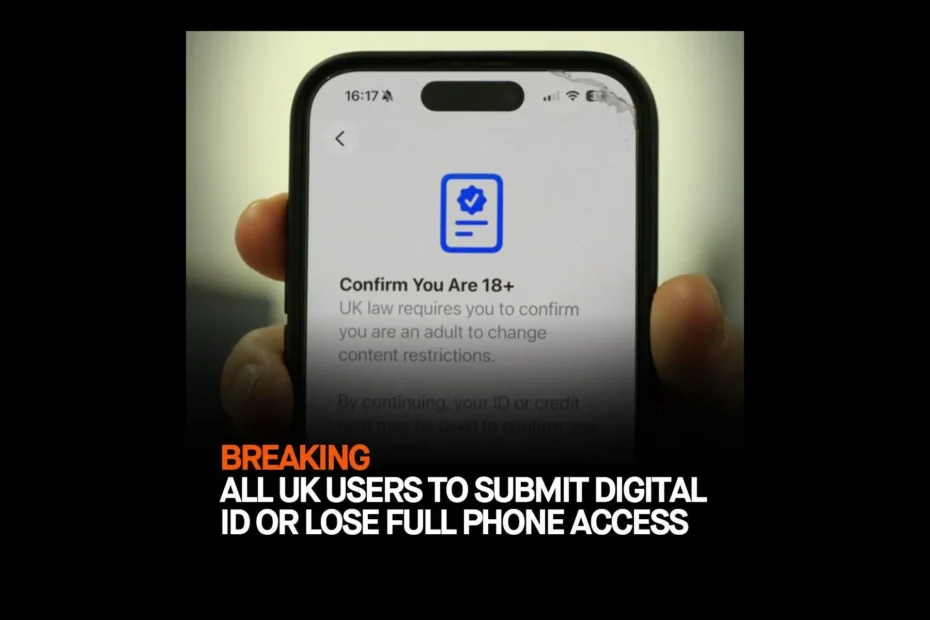
You may have seen the social media posts in the past 24 hours, “The UK Government announces that all the UK phones will require digital ID proof. This means that Britons will be left with CHILD-LOCKED devices unless they comply with digital ID checks”.
If your feeds look anything like mine, that screenshot has been doing the rounds and driving people nuts. Running a home lab and self-hosting my entire digital life to keep big tech out of my data, my gut reaction was a tired sigh but before jumping to conclusions, let’s look at what is actually going on.
Where This Came From
The noise started after recent announcements out of Westminster. The government has been pushing the Online Safety Act, asking tech giants like Apple and Google to look at device-level controls to protect kids online. Around the same time, discussions about digital ID integrations for age checks popped up in the news.
Take those bits of news, feed them into social media algorithms, and a complicated policy debate turns into a viral panic overnight.
What’s Actually True
The viral posts claim that your phone is going to be forcefully locked down unless you hand over ID. That isn’t accurate.
There is no law forcing every adult in the UK to link a digital ID just to use a phone, browse the web, or run local apps. Your device isn’t turning into a brick tomorrow.
The Real Concern
Even though the extreme rumors are overblown, the underlying trend is still messy.
When governments pressure tech companies to bake age checks and content filters into operating systems, it opens the door to tricky compromises on privacy and encryption. For anyone into FOSS, self-hosting, and digital privacy, the worry isn’t a sudden phone shutdown—it’s the gradual creep of invasive tech built right into consumer hardware.
We don’t need to panic over sensationalised memes, but keeping an eye on how regulators handle device privacy is definitely worth the effort.
This has nothing to do with “protecting the children”.