I spent way too much time scrolling through a social media thread this morning about setting up smart home gear for a beginner. You know how it goes. Someone asks a simple question about getting a few smart bulbs, and within ten minutes, the comment section is a warzone of networking acronyms, VLAN arguments, and subtle sighs of exasperation.
It got me thinking about a dirty little secret in the consumer tech space: we are feeding people a massive pile of baloney about smart home Wi-Fi.
If you wander into any high street electronics shop or click through an online retailer, Wi-Fi smart devices are shoved in your face as the ultimate plug-and-play solution. “Just connect it to your router!” they say. It sounds harmless enough. But under the hood, this approach is a privacy and performance minefield disguised as convenience.
The ISP Router Bottleneck
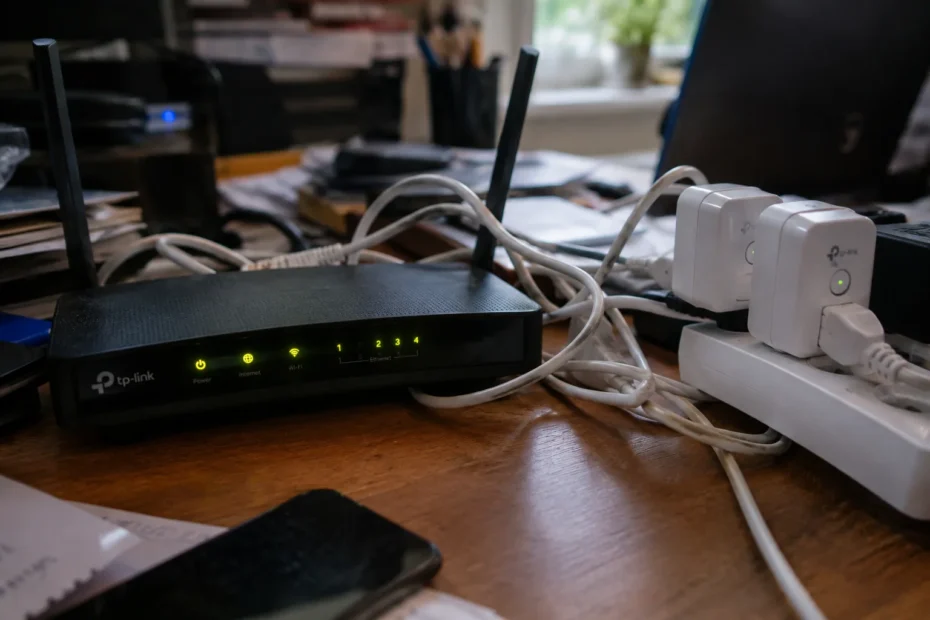
The problem is particularly grim for the majority of everyday users who rely entirely on the standard-issue router provided by their internet service provider, whether that’s Sky, BT, Virgin Media, or TalkTalk. These ISP-supplied boxes are designed to handle basic web browsing and streaming for a handful of phones and laptops, not juggle dozens of chatty IoT gadgets.
When you start populating your home with cheap Wi-Fi smart plugs and bulbs, your ISP router quickly gets bogged down. Between maintaining active connections, processing constant background chatter, and dealing with cheap Wi-Fi chipsets that love to drop off the network, your router’s CPU and memory take a hammering. Suddenly, your broadband feels sluggish, your streaming starts buffering, and you’re left rebooting the box every few days wondering why your internet is falling apart, all because a £10 smart plug is choking your home gateway.
The Illusion of “Local Control”
The most common defence from Wi-Fi gadget enthusiasts is, “Well, I run Home Assistant, so mine run locally!” Sure, your high-end lab setup might be routing traffic locally, but what about the millions of budget smart plugs and Wi-Fi cameras out there?
By default, the vast majority of cheap consumer Wi-Fi gear is hardcoded to phone home. Even if you block their internet access at the firewall, they spend half their CPU cycles crying out to cloud servers that no longer answer, generating unnecessary noise. They aren’t designed for privacy; they’re designed for a closed ecosystem where your telemetry is the real product.
And let’s talk about the band-aid solutions. The same folks telling beginners to buy Wi-Fi smart plugs will casually suggest, “Oh, just set up a dedicated IoT VLAN, configure static DHCP leases, and write custom firewall rules to isolate the SSID.”
Hold on. Let’s pause for a second. We are telling non-technical folks—people who just want a light to turn on when they walk into a room that they need enterprise-grade network segmentation just to safely operate a cheap light bulb. If a security setup requires an intermediate networking degree, it’s a failed consumer product.
The Physics Problem We Ignore
Even if you ignore the privacy and setup headaches, there’s the brutal reality of radio frequency physics. The 2.4 GHz band is a crowded, dystopian wasteland. It’s shared by your Wi-Fi, your neighbours’ Wi-Fi, Bluetooth devices, baby monitors, microwave ovens, and every smart gadget in a three-door radius.
Wi-Fi is chatty. Devices constantly scream out probe requests and beacons, demanding airtime. When you stack dozens of cheap Wi-Fi smart devices onto your access point, you aren’t just eating up IP addresses; you’re clogging the airwaves with packet overhead.
Where Does Matter and Thread Fit In?
Of course, the tech industry isn’t completely blind to this mess. Enter Matter and Thread, the latest acronyms plastered across shiny new packaging promising to save us from ourselves. In theory, Thread creates a low-power, robust mesh network just like ZigBee, while Matter acts as the common language allowing everything to play nicely together locally without relying on the cloud.
Sounds brilliant, right? Except right now, we are in an awkward transition phase. Many manufacturers slap a “Matter-compatible” sticker on a device, only to quietly require their proprietary app or a cloud connection during the initial setup phase. While Thread is a massive step in the right direction compared to clogging your ISP router with Wi-Fi nodes, the ecosystem is still maturing. It’s getting better, but it’s not quite the bulletproof, friction-free utopia the marketing hype would have you believe.
Why We Need to Pivot
This is precisely why those of us tinkering in our labs eventually migrate away from Wi-Fi for sensors and switches. Protocols like ZigBee, Z-Wave, or properly implemented Thread meshes aren’t just nerdy alternative options, they are sanity savers. They operate on a separate network, keep local traffic entirely inside your own four walls, don’t hog your Wi-Fi bandwidth, and most importantly, don’t require an internet connection or an engineering degree to keep private.
If we want more people to embrace self-hosting and true data ownership, we need to stop pretending that cramming our poor ISP routers with cheap cloud-dependent IoT trash is acceptable. Let’s keep our Wi-Fi for things that actually need high bandwidth, and let our smart gadgets talk quietly amongst themselves on a proper local mesh.