
Coming across the video “They’re Banning Your Home Servers” from creator Loyal Moses discussing the California legislative battle over the “Protect Our Games Act” (AB 1921) immediately caught my eye, pulling me down a rather depressing rabbit hole about digital ownership and what it means for anyone who likes running their own gear.
Over in California, that modest little piece of legislation hit a brick wall back in June 2026, stalling out in a Senate committee vote and landing in procedural limbo until the 2027 legislative session. You might wonder why a bloke running a home setup here in the UK should care about a stalled American state bill about video games. After all, big tech companies treat global consumers like captive audiences no matter where we live, and we are all stuck under the same thumb of buying digital “licenses” that can be revoked whenever a publisher feels like pulling the plug. But the real story isn’t just about whether a dead racing game stays playable; it’s about what industry lobbyists openly admitted during those hearings.
When the Entertainment Software Association, the trade group speaking for corporate giants like Microsoft, Sony, and Electronic Arts, lobbied against the bill, their argument went somewhere genuinely bizarre. They stood up in front of lawmakers and declared that community-operated, private game servers are essentially a form of illegal piracy. To back that up, they actually pointed at community-run Minecraft servers, arguing that running your own multiplayer instance outside of corporate control is a black market threat that lacks proper safety standards.
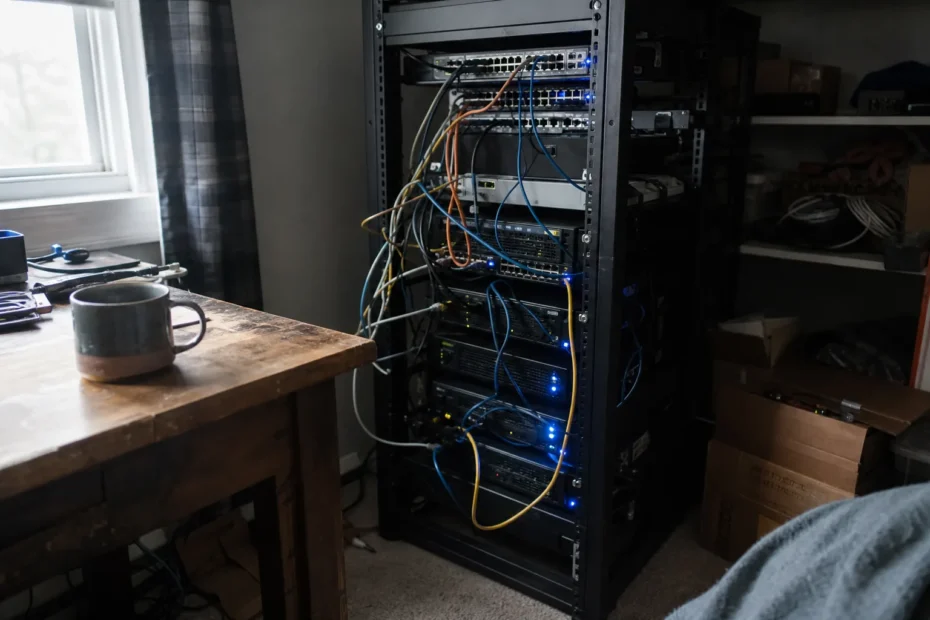
If you spend your free time setting up local game servers, hosting your own services with Docker, or tinkering with Proxmox boxes, that statement should sound alarming. The corporate playbook is moving past just forcing us into monthly subscriptions and rent-seeking walled gardens. Now, they are trying to shape the law and public narrative to brand independent, user-controlled hardware as suspicious, unsafe, and legally shady.
It is the oldest trick in the book: wrapping themselves in the flag of security and safety whenever they want to crack down on decentralisation. If a major trade group can argue that hosting your own game server is piracy because it bypasses corporate oversight, it doesn’t take much imagination to see where else that logic gets applied next.
The irony is hard to miss. Microsoft and Mojang have spent well over a decade encouraging the self-hosted Minecraft scene by letting anyone download server software for free. For the ESA to stand up in public and call that piracy shows just how much disdain big tech has for the entire concept of user ownership. They want a future where every single byte of data flows through their centralised servers, servers they can turn off the moment quarterly profits dip.
While the California bill sits on pause, and the European Union wrestles with massive pushes like the Stop Destroying Videogames initiative, the battle lines are pretty clear. Big tech looks at your local hardware and sees a loophole they want to close. They want us dependent, tracked, and permanently renting our digital lives.
That is why keeping things local matters. Every service you host yourself, every bit of data you keep off someone else’s cloud, and every time you choose open-source over a locked-down platform, you’re pushing back against that control. We might not win every fight against industry lobbyists overnight, but as long as we keep our hardware in our own rooms and our code out of their hands, they can keep their digital licenses to themselves.